


Water-based nanotechnological water-repellent treatment
Makes surfaces water-repellent, maintaining their breathability

Nanotechnological formulations that create water-repellent surfaces while maintaining their breathability.
In contact with water, the materials commonly used in construction absorb humidity, being characterized by a porous and capillary structure. The absorbed water often turns into visible damage of a physical, chemical and biological nature, harmful to the external appearance of the structures and, above all, to their functionality.
Compared to traditional "waterproofing" and "sealing" products, which form a superficial plastic layer, water-repellent nanotechnological products repel water while ensuring the breathability of the surface.
The interesting characteristic of nanocoatings is the ability to confer superhydrolific and superhydrophobic properties to the surface on which they are applied. In fact, they are able to reduce the wettability of surfaces.
Here is how they behave in the application test phase:
The more spherical the drop, the more hydrophobic the surface.
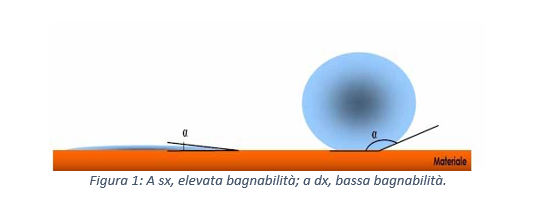
Fig.1: on the left, high wettability; on the right, low wettability.
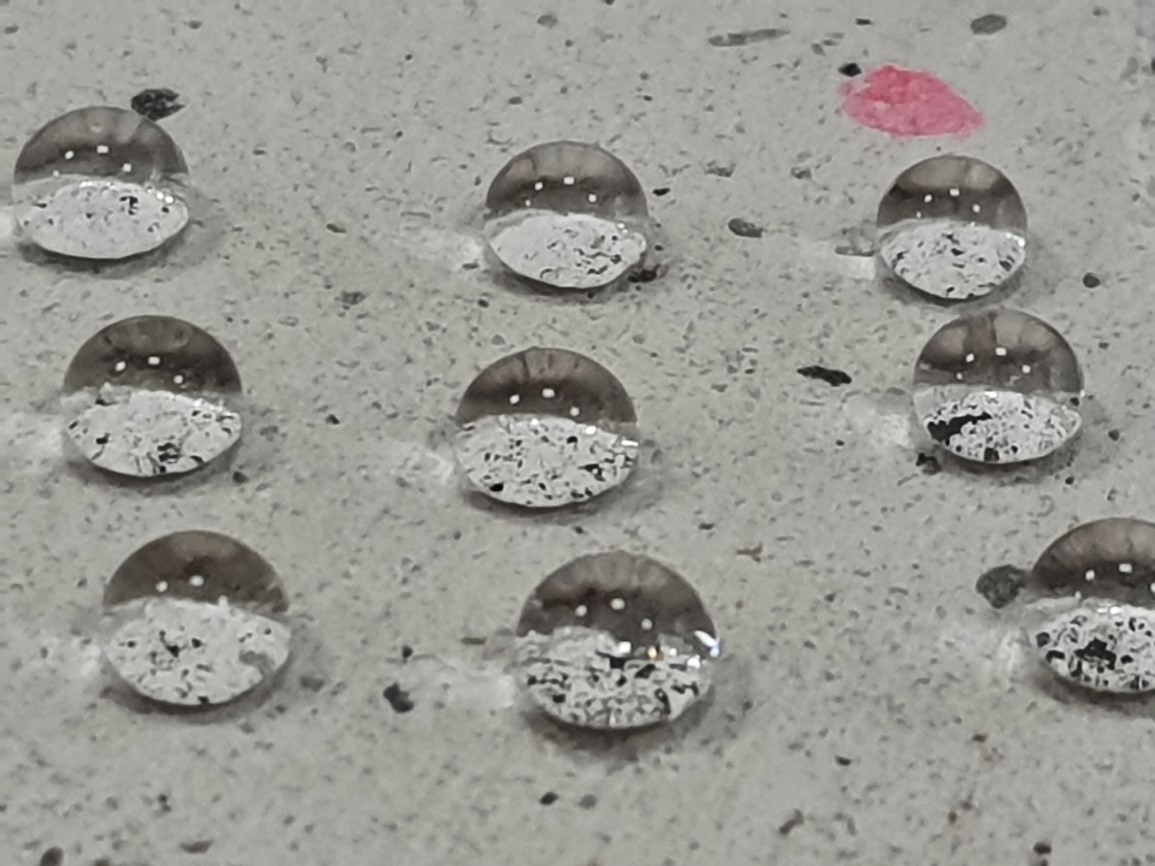
By reducing water absorption, the products protect against potential damage resulting from freezing environmental conditions.
At the same time, the usual degradation process of the surfaces themselves is delayed, thus preserving their aesthetic appearance over time. This formulation also has an inhibitory action on the formation of algal efflorescence, such as mold and lichen, and prevents the appearance of bleaching-type discoloration effects, associated with the ionic migration of salts.
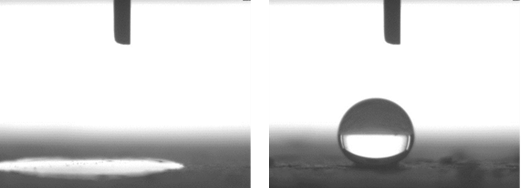
Below are some results, in the form of static contact angle, of the surfaces before and after treatment with the water-repellent product NS67 WR:

UNI EN 1934:2000 and ISO 9869-1 Certifications for Energy Saving.
Benefits
- Traditional waterproofing products/sealants, based on plastic polymers, even small ones, wear out quickly due to UV rays: after just six months their effectiveness can be up to 75% lower
- The nanotechnological water-based water-repellent product, subjected to accelerated aging tests simulating a period of 8 years, shows a loss of approximately 20% compared to sealants based on plastic polymers.

Associated Product Data Sheets
NS67 WR
NS67 BRICK


GUARANTEES

INSURANCE

TECHNICAL ASSISTANCE
